
Thermal convection in granular gases with dissipative lateral walls
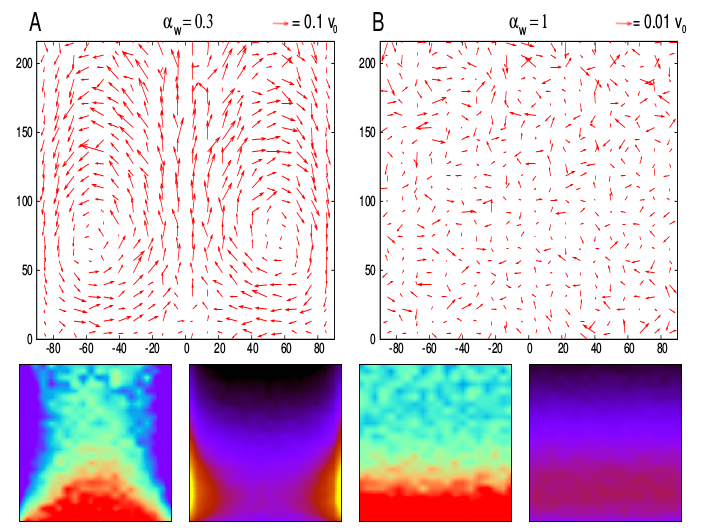
Convection in molecular fluids is provided by the competition between gravity and an adverse temperature gradient (two thermostats, the hotter below, the colder above). In a granular gas it can be achieved by a single thermostat at the base, for instance a vibrating piston. Energy dissipation provides the “second thermostat” which spontaneously forms gradient and may stabilize a convective state. Here we have demonstrated that even the simple dissipation in the collision between grains and lateral walls is sufficient to trigger convection, without any critical threshold.… Read the rest
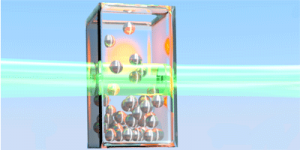 A random laser is usually obtained pumping light through a disordered medium. The dynamics of light through a heterogeneous configuration of scatterers and cavities provides emitted spectra with random and fluctuating peaks which have a wide range of applications and are nowadays subject to an intense theoretical activity. In this work we have added a new flavour to the idea of random lasers, replacing the usually static disordered medium with a vibrofluidized granular material.…